Untying a tie
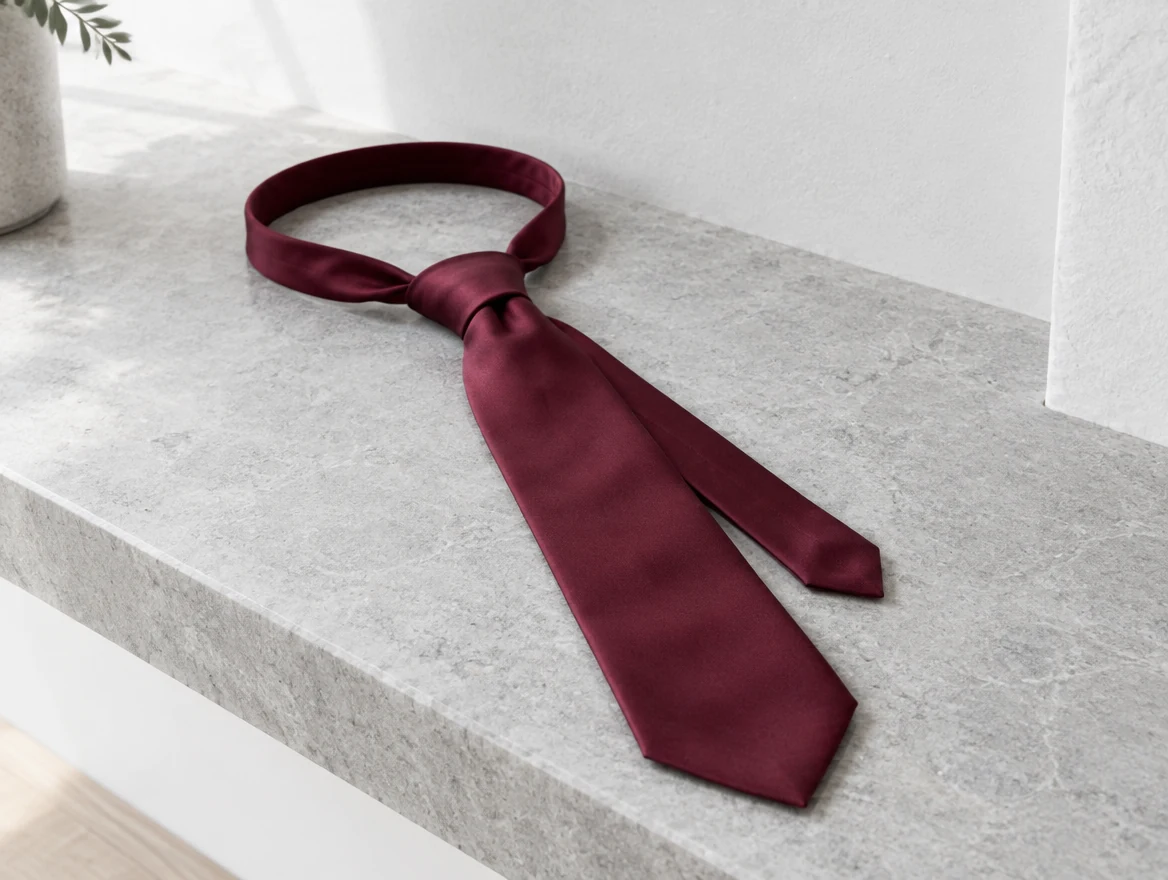
Undo the knot the way you tied it, in reverse. Pulling the narrow end out through the knot is quicker, but it strains the stitching and the lining inside the tie, and the damage adds up each time.
- Loosen the knot by gently working it from side to side, not by pulling at the narrow end.
- Pull the wide end back out of the front band.
- Unwrap it, following the steps of the knot backwards.
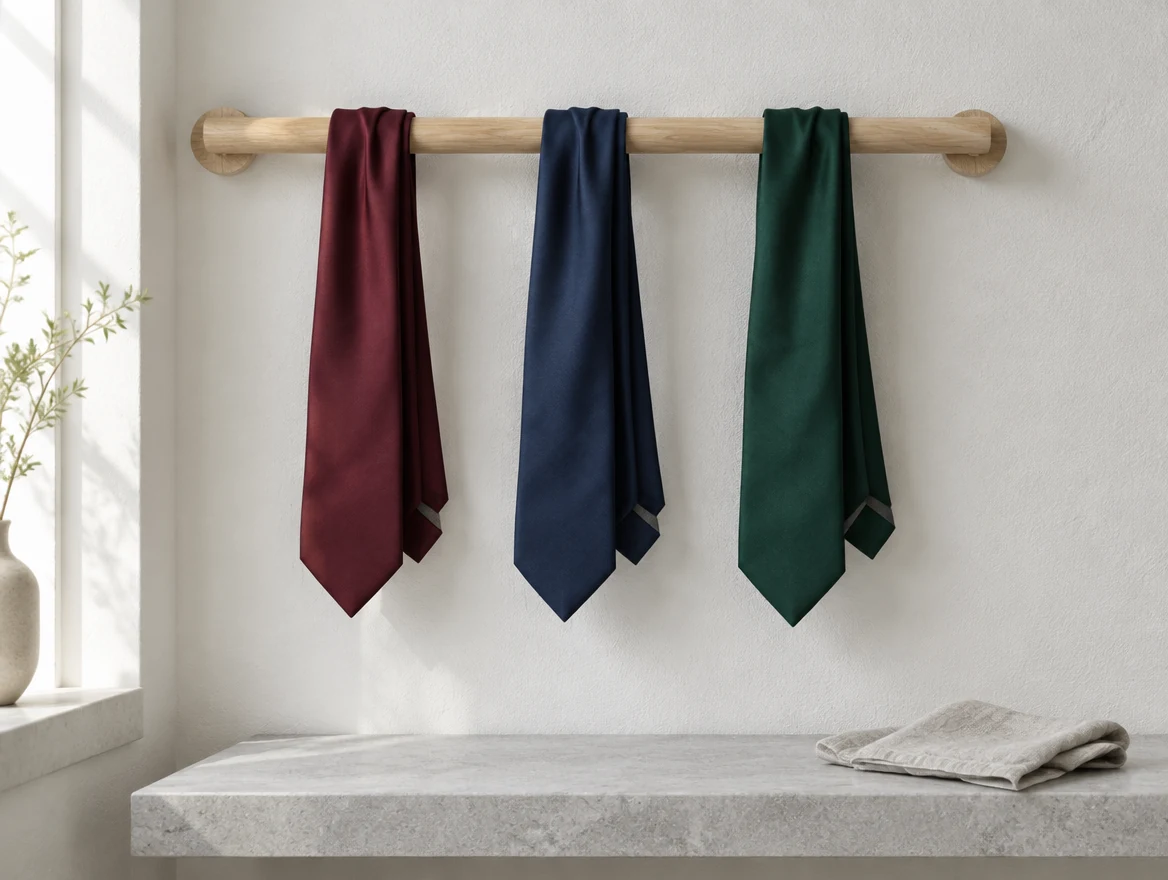
- Hang the tie up, or roll it loosely, so the creases from the knot can relax. After a day or two most of them are gone.
Why it matters
A tie has a lining inside it that gives it body. Pulling the narrow end through the knot stretches and twists the fabric and strains both the stitching and that lining. Over time the tie warps and gets harder to tie with a good knot and dimple. Leaving the knot tied between wears does harm too, so undo it when you take the tie off.
Storing ties
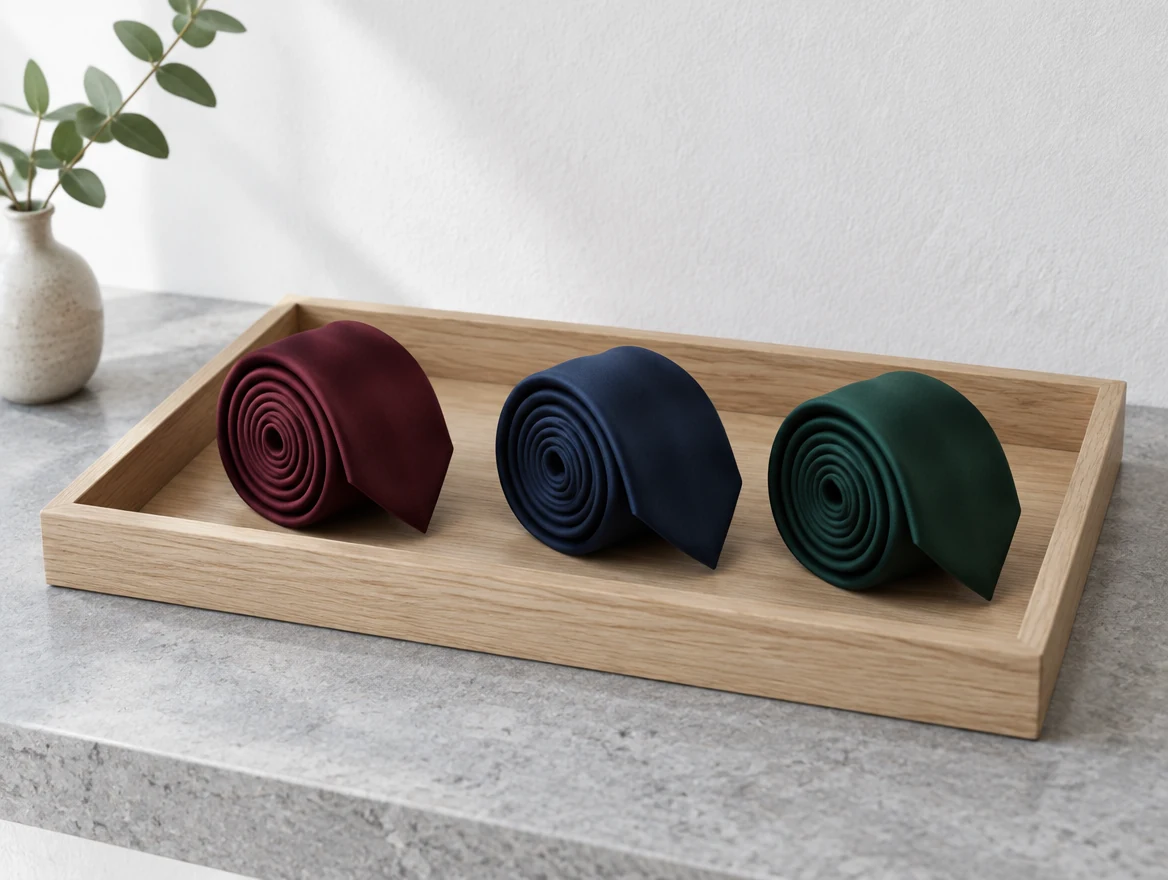
Hang your ties if you have the room, and roll them when space is short or you are travelling. Either way, the creases from the knot should relax and nothing should press down on the tie.
-
Hang
Best for silk, every dayA tie rack or hanger is the best home for most ties. Hanging lets the creases fall out. Give each tie a little space so they do not overlap and crease each other.
-
Roll
Best for travel and drawersRoll the tie loosely from the narrow end and keep it where nothing will press on it. In a suitcase, keep rolled ties away from heavier clothes.
-
Lay flat
Best for knit tiesKnit ties are the exception to hanging. Roll them or lay them flat, because a knit left hanging for a long time stretches out of shape.
Getting out wrinkles
Start with the gentlest fix and only move on if it fails. Most wrinkles drop out on their own once the tie hangs for a while.
Hang it
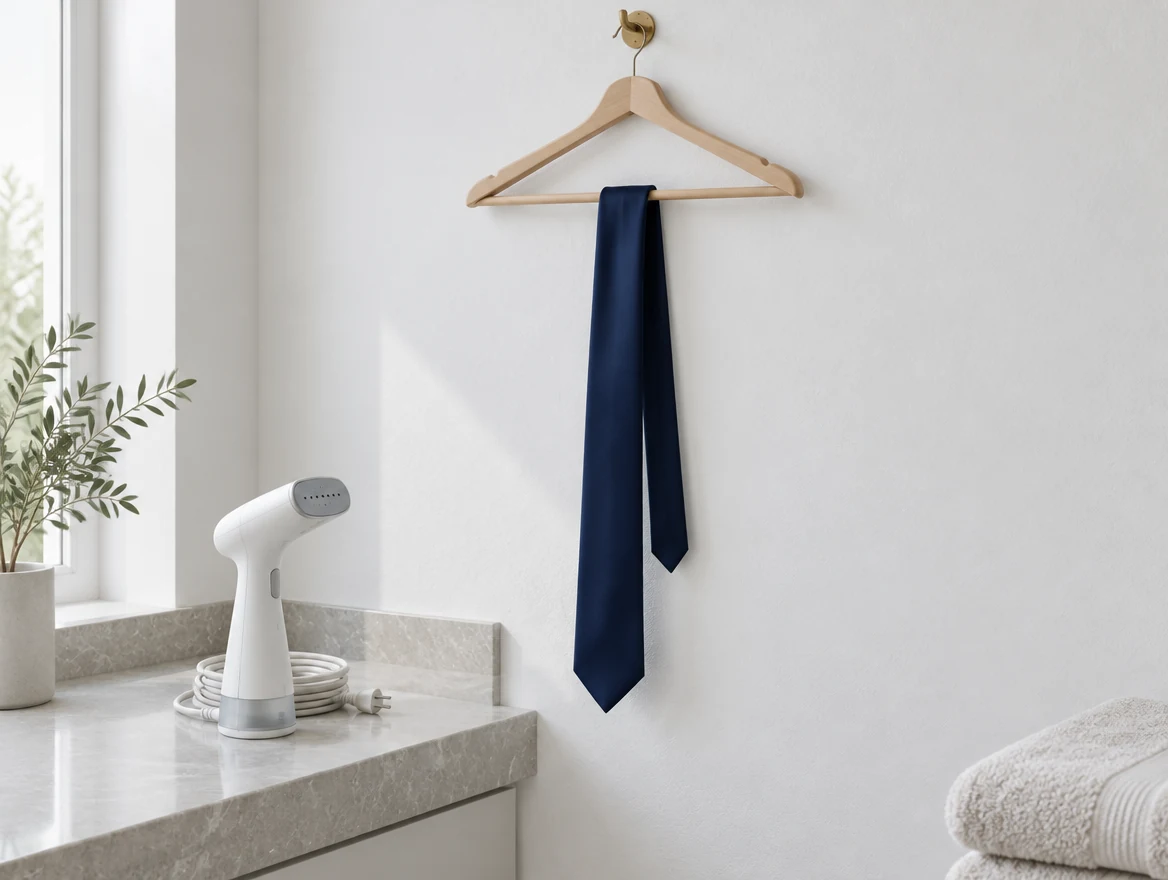
Untie the tie properly and hang it up for a day or two. If some wrinkles are still there, roll it up from the narrow end, smoothing as you go, and leave it rolled overnight before you hang it again.
Steam it
Hang the tie in the bathroom while you take a hot shower, with the door shut. For a quicker fix, use a handheld steamer held well away from the fabric, further from silk than from cotton or linen.
Iron it, carefully
- Check the label. Use the lowest setting for silk; wool takes a medium heat, and cotton or linen a little more.
- Lay a damp cotton cloth over the tie, so the iron never touches the fabric.
- Press briefly and lightly, lift and move on. Do not slide the iron or let it rest in one place.
- Do not press the edges flat. The rounded edges are part of the tie's shape.
Stains and cleaning
A stain is easiest to lift while it is fresh. Silk does not take well to water or scrubbing, so blot gently at home and leave anything serious to a dry cleaner.
First
Check the label. Many silk ties are dry clean only, and those are best left to a professional.
Spills
- Lift off any food, then blot up as much as you can with a clean, dry cloth. Do not rub.
- If a mark is left, stop there and take the tie to a dry cleaner. Water can leave a ring of its own on silk.
Grease
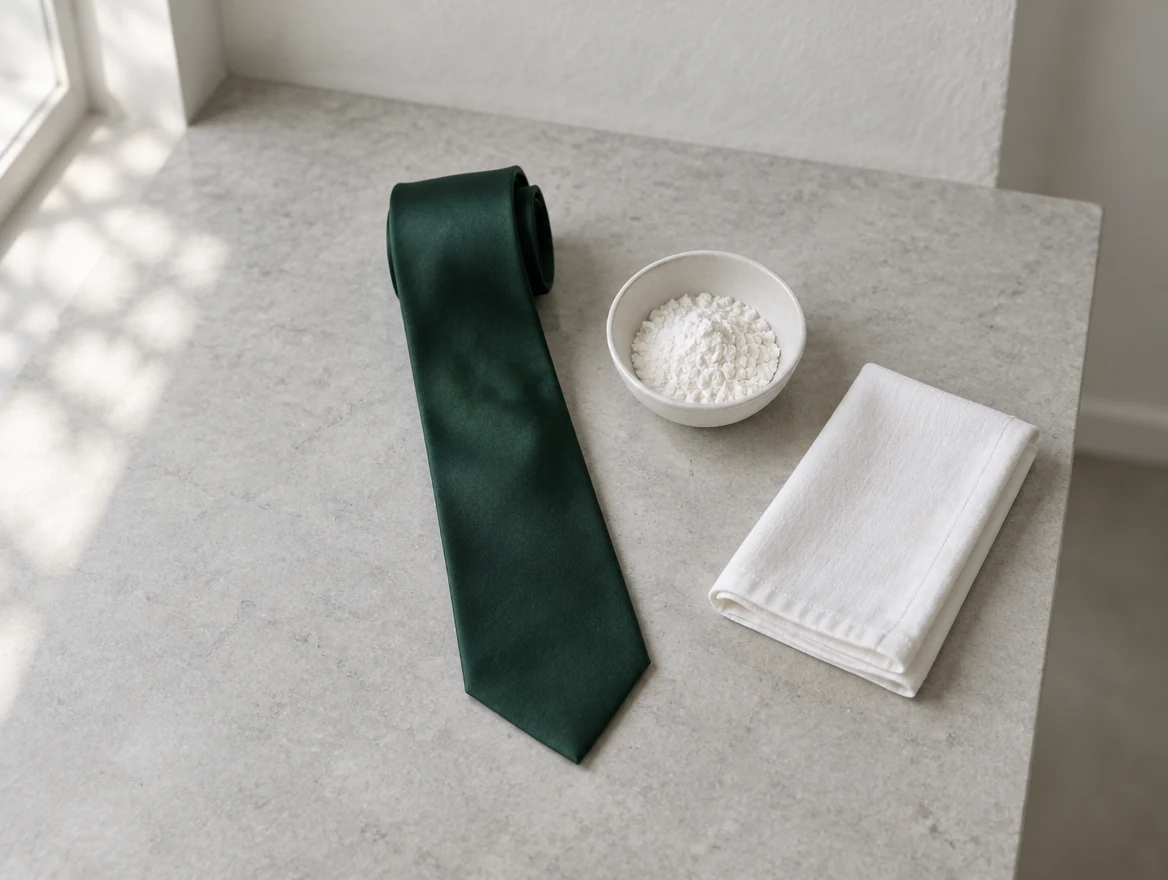
Cover the spot with talcum powder or cornflour to soak up the grease. Leave it overnight, then gently brush it off. If the mark is still there, do it again.
Never
- Put a silk tie in the washing machine or the dryer
- Rub a stain hard
When to use a dry cleaner
For a valuable tie, a stain that has set, or anything you are unsure about, go to a dry cleaner who knows ties, and tell them what caused the stain. Don't make it a habit, though: dry cleaning and pressing can flatten a tie over time.